
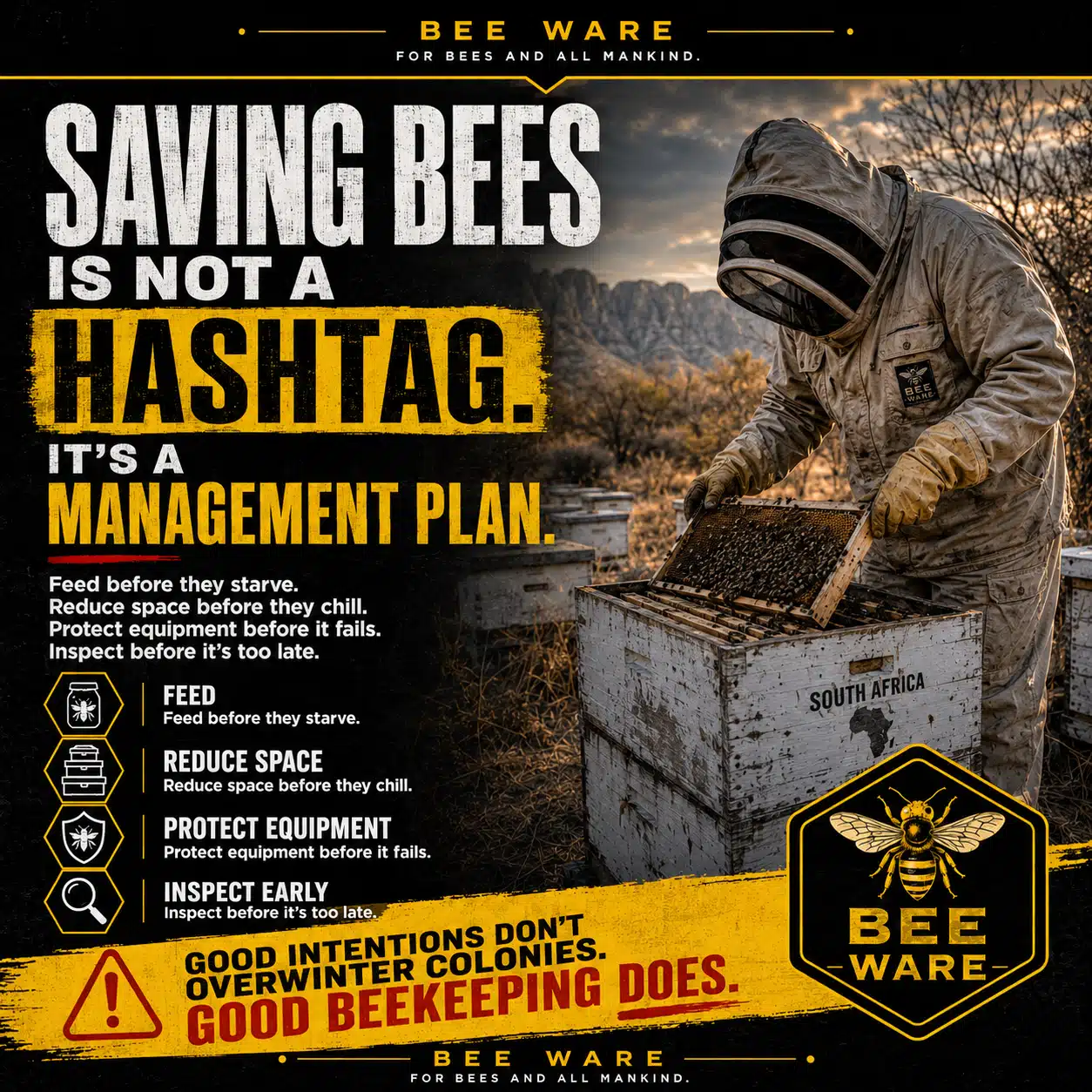

Saving Bees Takes More Than a Hashtag
Beekeeping is more than a social media trend. For new beekeepers in South Africa, caring for your colonies through proper management ensures they survive our diverse climate and support the pollination of crops and indigenous plants. Good beekeeping means being proactive rather than reactive
- Feed bees before they starve – provide sugar syrup or pollen substitute when natural nectar is scarce. Use Bee Ware’s internal feeder for convenience
- Reduce hive space before bees chill – reduce supers and frames to match the cluster size so bees can regulate temperature and conserve en
- Protect equipment before it fails – maintain and repair hives, treat wooden surfaces, replace worn parts, and invest in durable Bee Ware protective gear.
- Inspect early – inspect your bees early to identify problems, pests, diseases, or queen issues and act quickly to protect the colony.
Saving Bees: Feed Before They Starve
During nectar dearths or in winter, honeybees can run short of natural food sources. Check your colonies’ stores regularly and provide sugar syrup or a pollen substitute when supplies are low. Keeping bees well‑fed helps them build strong populations for spring and reduces stress that can lead to disease.
Saving Bees: Reduce Space Before They Chill
As populations decline in cooler months, large hive volumes can be a disadvantage. Reduce the number of supers or frames to match the cluster size so bees can more easily regulate temperature. This prevents chilled brood and conserves the colony’s energy.
Protect Equipment Before It Fails
Inspect and maintain your hives and protective gear. Repair cracked boxes, replace old frames and ensure lids and bottoms fit snugly to keep pests like ants and wax moths out. Sound equipment protects your investment and provides a secure home for bees.
Saving bees: Inspect Early
Regular inspections allow you to spot problems such as queen loss, disease or pest infestations before they become serious. Look for signs of brood pattern changes, parasites and sufficient food stores. Early intervention can save a colony from collapse.
With mindful feeding, space management, equipment care and routine checks, you’ll give your bees the best chance of thriving. Bee Ware offers quality hive equipment and advice to help South African beginner beekeepers succeed and keep our pollinators healthy.
Start beekeeping with our online beekeeper’s academy or come to one of our beginner beekeeping courses in Midrand that run monthly.
Saving Bees in Winter Takes Management.
The full article sits below:
Absolutely —South African beginner beekeepers and saving bees.
Saving Bees Takes More Than a Hashtag
Saving bees is not a social media slogan. It is a beekeeping management plan.
For many new beekeepers in South Africa, the idea of “saving the bees” often starts with good intentions. But good intentions alone do not overwinter colonies, prevent starvation, protect equipment, or help bees survive seasonal stress.
Good beekeeping does.
South African beekeepers work across a wide range of climates, from cold inland winters to dry dearth periods and unpredictable forage flows. That means beginners need to learn how to manage colonies before problems become emergencies.
At Bee Ware, we believe that protecting and saving bees starts with practical action:
Feed before they starve.
Reduce space before they chill.
Protect equipment before it fails.
Inspect before it is too late.
Saving Bees Starts With Proper Beekeeping Management
Beekeeping is more than placing a hive in the garden and hoping nature takes care of the rest. A managed honeybee colony depends on the beekeeper to monitor food stores, hive space, equipment condition and colony health.
This is especially important for beginner beekeepers in South Africa, where nectar flows, cold snaps, droughts and forage shortages can vary sharply from one region to another.
A strong colony is not built by chance. It is built through regular observation, seasonal planning and timely action.
Feed Bees Before They Starve
During winter, drought, heavy rain periods or nectar dearths, honeybees can quickly run short of natural food. A colony may look calm from the outside while slowly running out of stores inside the hive.
Check your colonies regularly and monitor whether they have enough honey and pollen reserves. Where natural food is scarce, provide suitable feed such as sugar syrup or pollen substitute when needed.
Feeding bees at the right time helps reduce stress, supports colony survival and prepares the hive for stronger spring build-up.
For convenience, beginners can use a Bee Ware internal feeder to provide feed safely inside the hive.
Reduce Hive Space Before Bees Chill
As colony populations reduce during colder months, too much empty space inside the hive can become a problem.
A small cluster of bees may struggle to heat and defend a large hive volume. This can lead to chilled brood, wasted energy and weaker colonies going into spring.
Reduce unnecessary supers and match the hive space to the size of the bee cluster. This helps the bees regulate temperature more effectively and conserve energy during cooler periods.
For beginner beekeepers, this is one of the simplest winter management steps that can make a real difference.
Protect Equipment Before It Fails
Poor equipment puts bees at risk.
Cracked boxes, loose lids, rotten wood, damaged frames and poorly fitting hive parts can allow water, wind, ants, wax moths and other pests into the hive. Damaged equipment also makes inspections harder and increases stress on the colony.
Inspect your beekeeping equipment regularly. Repair or replace damaged hive boxes, frames, lids and bottom boards before they become a bigger problem.
Also check your own protective gear. A reliable bee suit, gloves, smoker and hive tool help you work calmly and safely, especially as a beginner.
Bee Ware supplies durable beekeeping equipment, hive tools and protective gear for South African beekeepers who want to manage their colonies properly.
Inspect Early Before It Is Too Late
Regular hive inspections allow you to spot problems before they become serious.
Saving Bees – Look for signs of:
Queen loss
Poor brood pattern
Low food stores
Pests and parasites
Disease symptoms
Weak colony population
Water damage or equipment failure
Early inspections give you time to act. Waiting too long often means the colony is already in trouble by the time the problem becomes obvious.
Good beekeeping is not about interfering with bees unnecessarily. It is about knowing when to check, what to look for, and when to take action.
Good Intentions Do Not Overwinter Colonies
Many people want to help bees, but slogans are not enough.
A colony survives because the beekeeper understands the season, reads the hive, manages space, provides support when needed and protects the bees from avoidable stress.
That is the difference between wanting to save bees and actually practising responsible beekeeping.
Learn Beekeeping the Practical Way
Whether you are just starting out or already have your first hive, Bee Ware can help you build confidence with practical training, equipment and support.
Start your beekeeping journey with our Online Beekeeper’s Academy, or join one of our Beginner Beekeeping Courses in Midrand, held monthly.
Learn how to manage your bees properly, prepare for seasonal changes and give your colonies the best chance of survival.
Saving bees in winter takes management.
Good intentions do not overwinter colonies. Good beekeeping does. Let’s get to saving bees.